
Apple Adds the iPhone 17 Lineup to Its Self Service Repair Program
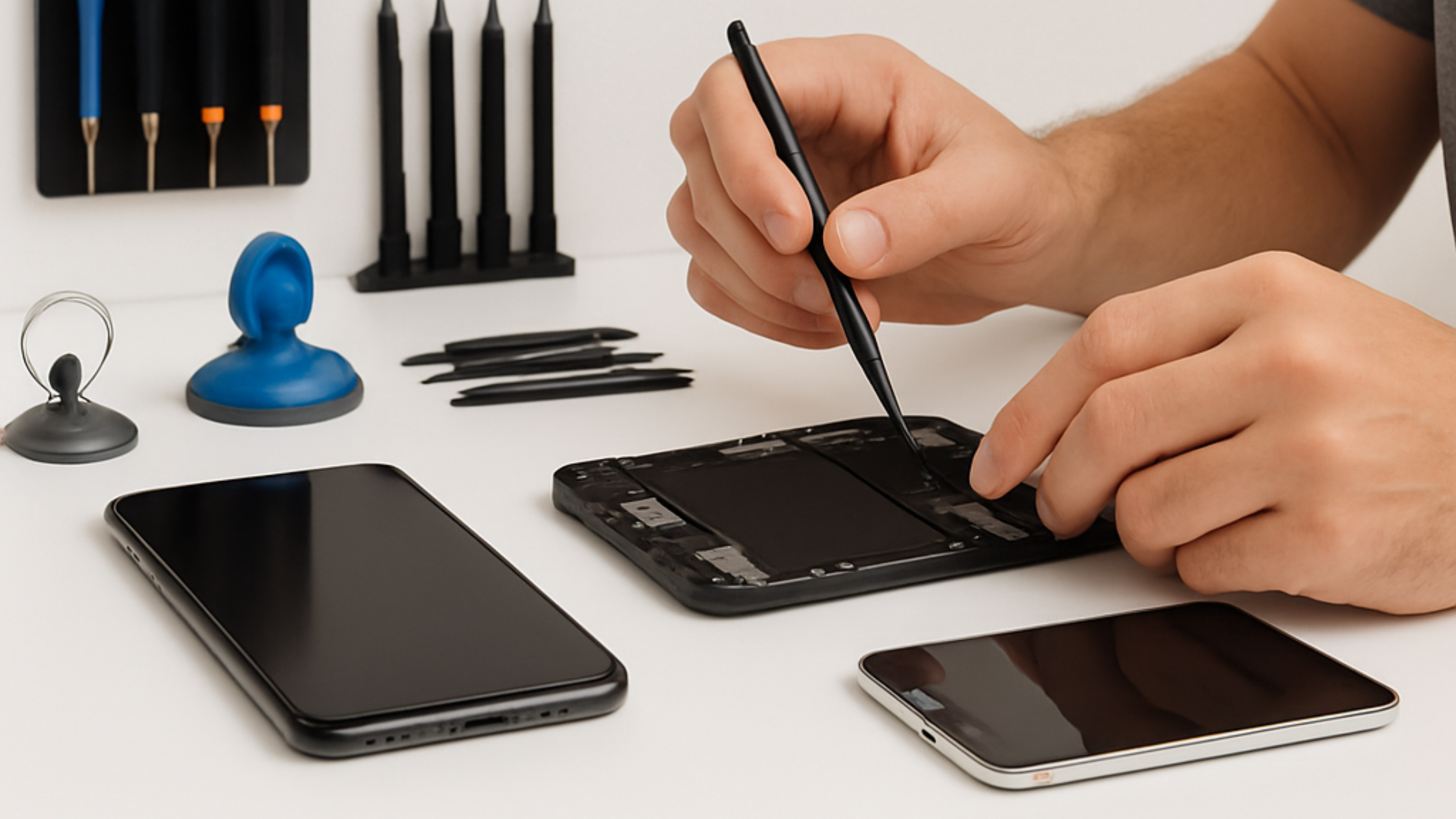
For a long time, iPhone ownership followed a pretty standard script. If something broke, you booked an appointment, mailed your phone in, or took it to an authorized shop. Repair was something most people watched happen, not something they did themselves. Apple’s approach was polished and controlled, and for years that control came with a clear message: iPhones are not meant to be opened at the kitchen table.
That script has been changing, slowly but unmistakably, since 2022. And this week, Apple took another step down that road by adding the full iPhone 17 lineup to its Self Service Repair program. If you’re holding an iPhone 17, iPhone 17 Pro, iPhone 17 Pro Max, or the new iPhone Air, you can now buy genuine Apple parts and follow Apple’s official manuals to repair your phone on your own.
It is not a small shift. It is Apple acknowledging that more customers want options, and that repair is part of the ownership story now, not a side note.
The moment repair becomes an option
Think about how repairs usually begin. You notice something small. A battery that doesn’t last like it used to. A camera that suddenly struggles to focus. A drop that leaves a spiderweb crack across the screen. None of these problems feel dramatic at first, but they all lead to the same question: what next?
Apple wants that question to have more than one answer.
With the iPhone 17 models now in the program, users in the United States, Canada, the United Kingdom, and many European countries can visit Apple’s Self Service Repair portal, pull up the exact manual for their device, and order the parts needed for common fixes. Batteries, cameras, display assemblies, microphones, speakers, and other components are all there to purchase. The manuals walk through the repairs step by step, using the same kind of documentation Apple provides to professional technicians.
The result is straightforward. If you know what you’re doing, you can fix your own phone without going off-brand, guessing your way through a YouTube teardown, or using parts of uncertain quality.
How we got here
This program did not appear out of nowhere.
Apple launched Self Service Repair in April 2022 after years of pressure from right to repair advocates who wanted companies to stop locking customers out of their own hardware. The argument was simple: if you buy a device, you should be able to maintain it. Apple’s old system made that hard. Parts were restricted, manuals were not public, and repairs outside the authorized network often meant losing features or warranties.
Self Service Repair was Apple’s answer. It gave people a legitimate lane for doing repairs themselves, but it was also designed to keep Apple’s standards and processes intact. Genuine parts only. Official tools. Structured diagnostics. Required calibration for certain repairs. It offered access, but on Apple’s terms.
That balance has been controversial. Some advocates see the program as progress. Others see it as tightly gated and too expensive to be truly empowering. Both things can be true at the same time. Even so, the program has kept expanding, and each new expansion matters because it normalizes the idea that repair should be available from day one.
Adding the iPhone 17 lineup continues that story.
What the experience looks like in real life
Apple’s process is meant to mirror professional repair, only shifted into your hands.
You start with diagnosis, either by following Apple’s troubleshooting guidance or confirming what part needs replacing. Then you order through the Self Service Repair Store, which Apple says is operated by an authorized third party. If you don’t have the right tools, you can rent Apple’s toolkit for seven days for $49. After the repair, certain “core” parts like batteries or displays can be returned for credit, much like repair shops return old components through Apple’s supply chain.
On paper, it is clean and methodical. In practice, it takes patience and confidence. iPhones are still compact, adhesive heavy, and full of delicate connectors. Many repairs include software configuration steps that must be completed correctly for full functionality.
Apple is offering the bridge. You still have to decide if you want to cross it.
The practical reality, and why most people will not do this
Even with official support, DIY iPhone repair is not designed for casual weekend projects. The parts are expensive, the steps are detailed, and the margin for error is thin.
A screen replacement is possible, but it is not quick. A battery swap is doable, but it requires careful handling. If you have never opened a modern smartphone before, it can feel like a high stakes puzzle.
For most customers, an authorized repair provider will remain the simplest route. You pay, you wait, you get your phone back without worrying about damaging a ribbon cable or misaligning a seal. Self Service Repair is more about giving capable users a legitimate alternative than replacing the repair shop model entirely.
Still, the alternative matters because it changes the ownership mindset. Your phone is not a sealed mystery anymore. Apple is at least willing to show you the map.
When repair is not the right move
There is one more decision point that does not get talked about enough. Sometimes the smartest choice is not to repair at all.
There are plenty of situations where the repair cost comes close to, or exceeds, the value of the phone. You might be looking at a cracked back glass plus a degraded battery on an older model. You might need multiple parts replaced after a hard drop. At that point, repairing can feel like pouring money into a device you were already thinking about upgrading.
That is where resale becomes the better path.
When users sell damaged devices to The BuyBack Platform, those devices are repaired, tested, and sanitized before they are resold. This keeps phones in circulation longer and keeps them out of drawers and landfills. Even if a phone is not in perfect shape, it often has meaningful value, and sometimes that value is best unlocked by selling rather than repairing.
If you have a device collecting dust, or one you are unsure is worth fixing, it is worth checking its buyback value. The answer might surprise you.
The takeaway
Apple adding the iPhone 17 family to Self Service Repair is part of a bigger shift, not a one off announcement. It is Apple slowly moving from a world where repair is controlled and centralized to one where repair is at least partially shared with the customer.
You now have more options. You can fix your phone yourself if you have the skills. You can take it in for professional repair if you want the safer route. Or you can decide that repair is not worth it and sell the device toward your next upgrade.
Whichever path you choose, the important thing is that the path exists. Repair is becoming a normal part of owning an iPhone, and that is good news for anyone who wants their devices to last longer.
If repairing feels like more hassle or cost than it’s worth, skip the stress and trade it in with The BuyBack Platform to get cash back for your next upgrade.
